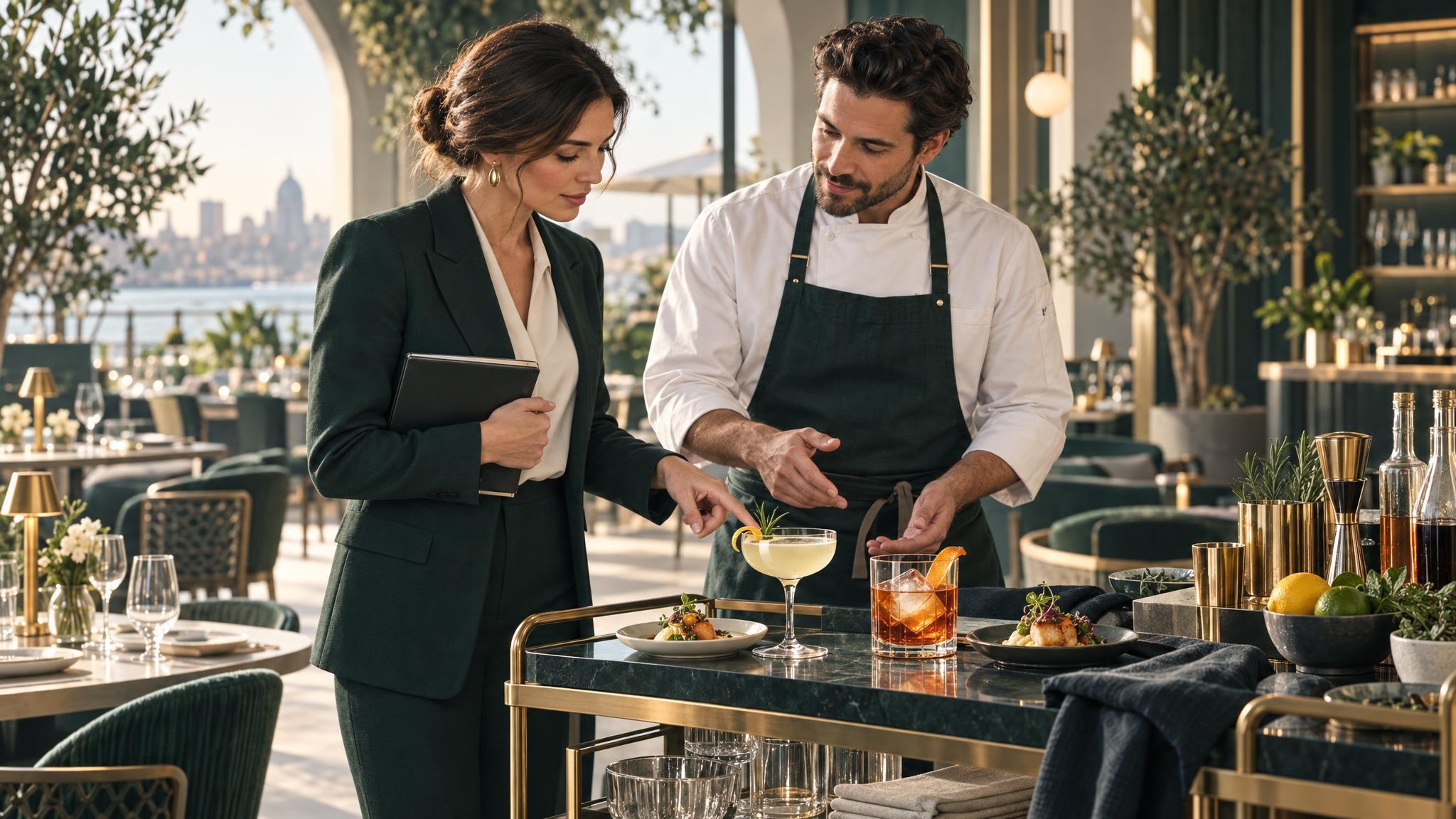
If you are weighing a menu refresh, a beverage reset, or a broader performance review, the first question is usually not, “Do we need more ideas?” It is, “Do we need help making the business work better?” That is where a food and beverage consultant comes in.
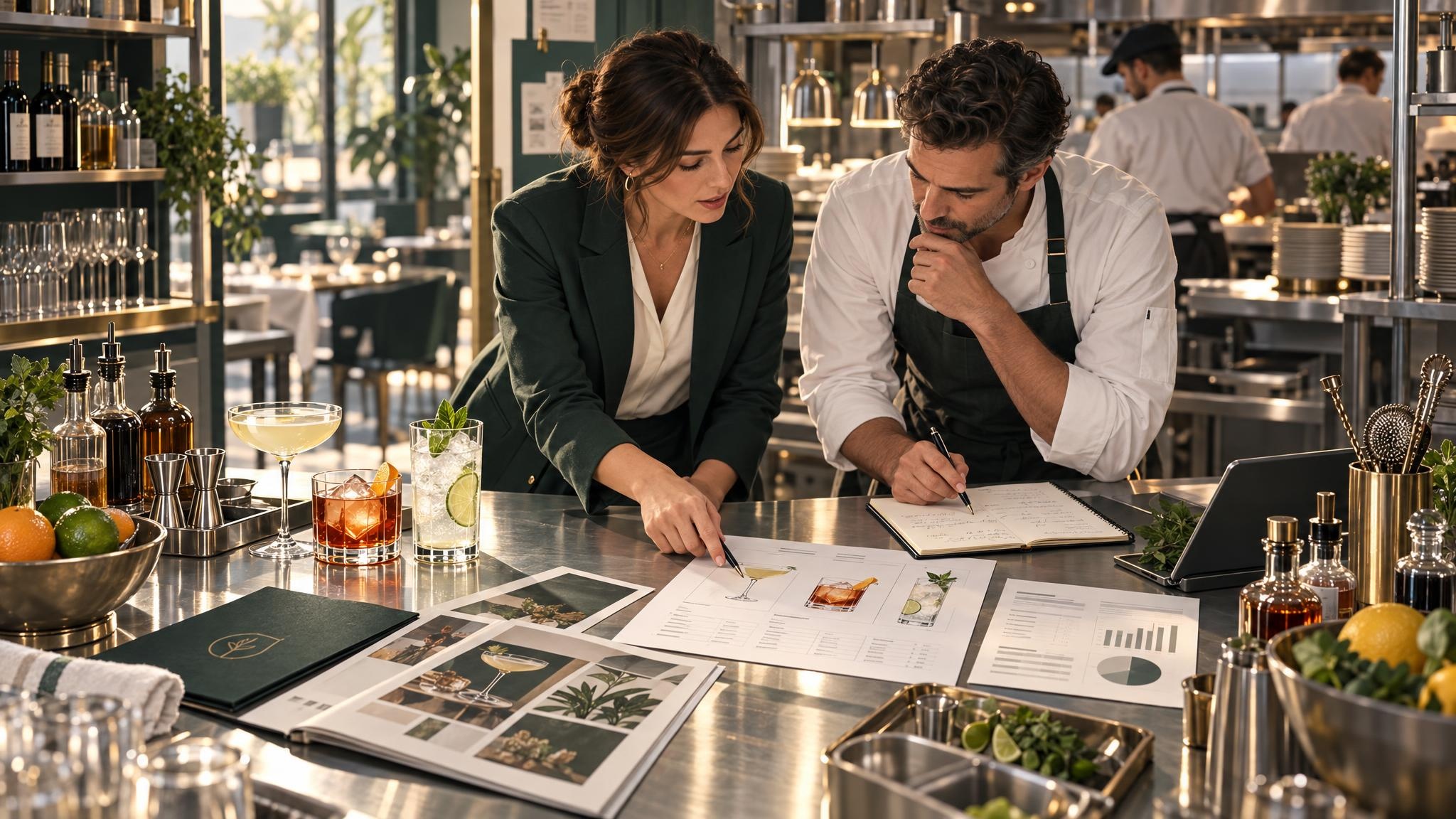
For restaurants, bars, hotels, and hospitality brands, the role is broader than cocktail development or menu copy. A good consultant looks at the whole system: what you serve, how it is priced, how the team executes it, how suppliers support it, how it shows up in guest experience, and how the numbers tell the story. In other words, the work should help you make better commercial decisions, not just prettier menus.
That matters because many operators do not need one-off creative help. They need a partner who can connect food, beverage, operations, marketing, and reporting without losing sight of how service actually works on a busy night. If that sounds familiar, it is worth asking what kind of support will solve the real problem, and whether a beverage consulting or hospitality consulting engagement is the right fit.
If you are already seeing signs of margin pressure, inconsistent execution, or a menu that feels harder to manage than it should, the most useful next step may be a conversation about scope. Schedule a beverage consulting conversation if you want to talk through where the business is getting stuck and what kind of support makes sense.
What a food and beverage consultant does for restaurants and hospitality brands
A food and beverage consultant helps you evaluate, improve, and often rebuild the parts of your offer that influence revenue, cost, guest satisfaction, and team performance. That can mean reviewing a bar program, tightening a wine list, simplifying food and beverage menus, improving prep flow, refining pricing, training staff, or clarifying a launch plan. It can also mean helping leadership decide what should be cut, what should be standardized, and what should stay because it supports the concept even if it is not the top seller.
The role is not the same as hiring a creative supplier or a freelance recipe developer. Those people may bring useful ideas, but a consultant should bring judgment. The best work combines creativity with operator reality. A beautiful menu that slows service, overwhelms the kitchen, or depends on products the team cannot source consistently is not really a solution. It is just a new version of the same problem.
That is also why the terms food and beverage consultant, hospitality consultant, and bar consultant overlap but do not mean the same thing. Bar consulting usually focuses on the drink program, service flow, inventory, and execution behind the bar. Hospitality consulting may cover broader guest experience, operations, launches, and internal systems. Food and beverage consulting sits across both, which is useful when the issue is not just one menu or one channel, but how the whole offer performs together.
In practical terms, you are hiring for a clearer decision-making process. What should the menu do? What can the team actually support? Where are costs drifting? Which suppliers make sense? How should the brand talk about the offer? Those are the questions that move the work from “interesting” to useful.
The business problems food and beverage consulting helps solve
Operators usually reach out when something feels off, even if they cannot name it neatly yet. Sometimes the symptoms are obvious. Other times the business is still selling, but the program is slowly becoming harder to manage, less profitable, or less distinct.
Margin pressure and pricing tension
One of the most common reasons to bring in outside support is margin pressure. Food, beverage, and labor all affect the same bottom line, and menus can quietly work against profitability when pricing, portioning, or prep requirements drift out of alignment. A popular item may still be the wrong item if it takes too long to produce, relies on expensive inputs, or creates waste that the sales volume does not justify.
On the beverage side, that may show up as cocktails with too many ingredients, low-margin pours that are selling too heavily, or premium items that are priced as if the market will carry them without any help from the staff. On the food side, it may look like dishes that require special prep, expensive garnishes, or too many moving parts for the labor available. A consultant should help you understand which items earn their place and which ones are simply taking up space.
For general context on cost pressure and menu pricing, the National Restaurant Association publishes industry resources that can help frame the conversation, including its menu prices insights and its resource on inflation and menu pressure. Those are not a substitute for your own numbers, but they are a reminder that pricing and cost control are not abstract issues.
Inconsistent execution
Another common problem is consistency. The recipe looks good on paper, but the team makes it differently from shift to shift. The kitchen improvises because the prep list is unclear. The bar crew pours differently because specs are not simple enough to follow. Managers notice the drift only after guests do.
This is where many consulting engagements prove their value. A consultant should not just say, “tighten standards.” They should help you decide which standards matter most, where variation is acceptable, and where it is costing you money or guest confidence. Sometimes the fix is a stronger recipe system. Sometimes it is prep documentation. Sometimes it is retraining. Sometimes it is removing a process the team was never able to support in the first place.
Supplier complexity and purchasing drift
Hospitality businesses often inherit more supplier relationships than they actively manage. That can lead to unnecessary complexity, uneven product quality, late orders, substitution issues, and weak leverage. If nobody is clearly accountable for purchasing habits, vendor communication, or inventory discipline, the program can become more expensive than it needs to be.
A consultant can help you review vendor mix, assess whether product choices support the concept, and decide where to simplify. That may mean consolidating ingredients, changing category mix, or adjusting specs so the program is easier to buy and store. It may also mean looking at whether the current supplier structure helps the business or just keeps it moving by habit.
Menus that are creative but hard to run
Some menus are designed to impress at first glance, but the real test comes during service. If the build is too complex, the prep burden is too high, or the team cannot explain the offer clearly, the guest experience starts to slip. A consultant should help you balance creativity with repeatability. That does not mean flattening the program. It means making sure the menu is ambitious in a way the operation can actually sustain.
Example: A restaurant has a cocktail list that looks compelling in a tasting room, but service slows every time a new drink goes out because the garnishes are fussy and the specs are hard to remember. A consultant would look at the labor impact, the ingredient list, and the menu hierarchy, then determine whether the answer is simplification, better standardization, or a different presentation altogether.
Weak guest communication and underused programs
Even a strong beverage or menu program can underperform if the team does not know how to sell it. Guests need a reason to notice the program, and staff need a clear way to talk about it. If the menu is discovery-driven, the language should support discovery. If the concept is approachable, the menu should not read like a puzzle. If the business is premium, the positioning needs to make that feel intentional rather than expensive for its own sake.
This is where beverage consulting and marketing can overlap in a useful way. The right program should be understandable, trainable, and easy to communicate on the floor, in pre-shift, and through launch materials. If those pieces are disconnected, the offer often fades after the first week.
Data that exists but does not drive decisions
Many teams have more data than they use. POS reports, inventory counts, item mix, ticket times, and sales by daypart are available, but no one has a clear habit for turning them into action. The result is reactive management. Decisions get made from instinct alone, or the same debates happen over and over because no one is looking at the same facts.
A food and beverage consultant should help you choose the reports that actually matter, then turn them into a decision rhythm. Which items drive sales and margin? Which ones create waste? Which menu categories are underperforming? Which service periods need more support? The point is not to collect more numbers. It is to use the right ones.
What a consultant should review in a food and beverage engagement
A useful engagement should touch the parts of the business that determine whether the program works in the real world. That usually means looking at financials, the menu itself, operations, suppliers, marketing, and reporting together, not as isolated buckets.

Financials and cost structure
The starting point is usually the money. A consultant should review sales mix, pricing structure, category contribution, cost control, and the way labor interacts with the offer. On the food side, that includes food cost and prep burden. On the beverage side, it includes pour costs, ingredient utilization, waste, and the balance between high-volume and high-margin items.
This review is more useful when it is tied to actual decision pressure. If a dish sells well but burdens the line, does it deserve to stay? If a cocktail has lower volume but helps define the concept and is easy to produce, should it remain? If a popular item creates comp risk or inventory waste, what does that tell you about the structure of the program? A consultant should help you answer those questions without flattening the business into a spreadsheet.
Menu architecture and beverage program
The menu is where strategy becomes visible. A consultant should review the food menu, beverage list, wine list, beer selection, and nonalcoholic options, then look at how all of it works together. The best menus are not just appealing. They are readable, consistent with the concept, and practical to execute.
Complexity is often the hidden issue. Menus get too long, ingredient lists get too specialized, or the hierarchy becomes hard for guests and staff to understand. Sometimes the answer is simplification. Sometimes it is restructuring. Sometimes it is removing a few items that create too much operational drag relative to the value they bring.
Example: A hospitality group may have a food menu that performs well but a bar list that feels disconnected from the rest of the experience. In that case, the consultant should look at how the beverage program supports the food identity, the service model, and the pace of the venue, not just whether the drinks taste good in isolation.
Operations and service execution
Ideas only matter if the team can execute them at scale. A consultant should evaluate prep flow, bar setup, line organization, recipe consistency, inventory controls, storage, and the training needed to keep the program stable. This is where many projects succeed or fail, because the business reality of service is often different from the tidy version on paper.
A menu that works in a tasting may fall apart on a busy Friday night. Garnishes run out. The prep list gets ignored. New hires cannot remember the specs. Managers are too busy to coach. If the operation does not have the labor, equipment, or storage to support the program, the consultant should say so early and help you adjust before the problem gets expensive.
Suppliers, purchasing, and brand relationships
Supplier alignment affects consistency, cost, and speed. A consultant should review vendor mix, purchasing behavior, substitutions, and whether current relationships are actually helping the business. The goal is not to replace every supplier. It is to make sure the program is supported by a buying structure that fits the concept and the operation.
This is also where beverage consulting can be valuable for emerging brands and suppliers. If you sell into hospitality, your product has to work in the hands of an operator. It needs to fit the menu, the backbar, the storage plan, and the staff’s ability to explain and serve it. A consultant who understands the operator side can help you position the product in a way that lowers friction rather than adding it.
Marketing, launch support, and guest communication
Marketing is not separate from the program. It is part of how the offer gets adopted. A consultant should look at launch plans, seasonal updates, staff messaging, on-premise promotion, and the copy or talking points that help guests understand what they are ordering.
That matters whether you are opening a new concept or refreshing a current one. If the menu is not supported by clear communication, the business can miss the chance to turn a good offer into a visible one. In some cases, beverage strategy and marketing support should move together so the launch feels coordinated rather than stitched together after the fact.
If you want that kind of cross-functional support, it can be helpful to explore how strategy and marketing sit together within services designed for beverage strategy. The most useful work usually happens when the operational plan and the go-to-market plan are built at the same time.
Data and reporting
Good reporting is not about looking at everything. It is about looking at the right things repeatedly enough to make better decisions. A consultant should help you identify the reports that matter most for your business, then translate them into actions that managers can actually use.
That may include item performance, sales mix, margin by category, daypart trends, waste patterns, or launch results. If the business is not already using data consistently, the consultant can help create a simpler decision framework so the team stops revisiting the same problems from scratch.
Common deliverables you should expect from a consultant
A strong consulting engagement should produce usable output, not just advice. The exact deliverables depend on the scope, but the work should leave your team with something they can implement, train against, and revisit later.
Common deliverables include a beverage strategy brief, menu review notes, pricing guidance, cocktail or beverage menu development, food and beverage menu structure recommendations, service standards, recipe specs, prep documentation, supplier recommendations, training materials, and launch support. For broader hospitality consulting, deliverables may also include role clarity, opening checklists, communication plans, or team training sessions that help leaders carry the work forward.
The most useful deliverables tend to be the least glamorous ones. A well-structured spec sheet, a practical prep list, or a clear menu hierarchy often matters more than an oversized presentation. If the team cannot use the deliverable during an actual shift, it probably is not finished yet.
You should also expect a plan for follow-through. Ask whether the consultant will refine the work after feedback, support launch, review performance after implementation, or help the team make corrections once service begins. Without that follow-through, the engagement can stop right when the operational questions become most important.
Example: In a seasonal beverage refresh, deliverables may include a tighter cocktail lineup, recipe cards, prep guidance, ordering notes, and staff talking points. In a broader restaurant consulting services engagement, the output may also include menu architecture, cost review, and service flow recommendations that affect both front and back of house.
Consultant, agency, or internal hire: which model fits the problem?
Choosing the right type of support is part of the decision. The wrong model can create extra cost without actually solving the issue.
When a consultant makes sense
A consultant makes the most sense when you need diagnosis, strategy, a reset, a launch plan, or a one-time transformation project. This is the right model when the business needs senior judgment without adding permanent headcount.
It is especially useful when the problem crosses functions. Maybe the menu is too complicated, the bar execution is inconsistent, the supply chain is clunky, and the staff messaging is unclear. That is not just a creative issue. It is an operating issue and a commercial issue. A good consultant can work across those lanes and help you prioritize what matters first.
When an agency makes sense
An agency is usually the better fit when the need is promotion, campaign execution, content, or broader brand communication. That can be useful work, but it is not the same as fixing the underlying operating model.
If the beverage program is weak because the recipes are hard to execute, the inventory system is messy, or the menu structure confuses guests and staff, an agency alone will not solve that. It may make the launch look sharper, but the business still has to run the offer every day. In many cases, the strongest setup is a consultant for the strategy and operational side, then agency support for the promotion side if the business needs it.
When an internal hire makes sense
An internal hire is often the right choice when the business needs ongoing ownership and repeated execution. If the organization is large enough to justify the role, a full-time leader can keep the work moving over time and manage the details that make the program durable.
Even then, consulting can still help. A consultant can define the role, set priorities, build the program, or support the new hire during onboarding. That can keep the business from hiring into a vague mandate and expecting the person to figure it out alone.
Many operators use a hybrid model. They bring in a consultant for strategy, rollout, or menu refresh work, then keep the day-to-day execution internal. That is often the most efficient answer when the business needs a reset but is not ready for a full reorganization.
What realistic outcomes look like from food and beverage consulting
The first outcome you should expect is clarity. Once the right review is done, you should understand what is working, what is not, and what deserves attention first. That clarity often leads to simpler menus, cleaner execution, better supplier choices, and more confident management decisions.
From there, the business outcomes may include a more usable beverage program, a more balanced menu, better staff alignment, stronger guest communication, and better visibility into performance. In some cases, the work also surfaces items that should be removed or standardized, which can feel less exciting but usually matters more than adding new ideas.
What you should not expect is a guaranteed sales lift or a universal margin result. Those claims depend on the concept, the market, the labor environment, and the team’s ability to execute the changes consistently. If a consultant promises the same financial result for every operator, that is a warning sign.
Timing also matters. A menu refresh may move quickly. A deeper operating reset can take longer, especially if training, ordering habits, or leadership behavior need to change. If the real issue is culture or accountability, progress will usually be slower than a simple menu swap, because the work is bigger than the menu itself.
The best way to judge the engagement is to ask whether the business is becoming easier to run. Are decisions clearer? Is the team more consistent? Is the guest experience easier to explain? Are the reports more useful? Those are the signals that the work is doing what it should.
How to choose the right food and beverage consultant
The right partner should understand both hospitality and the business behind it. That sounds obvious, but it is worth checking carefully, because not every consultant has the same range.
Start with operator experience. A consultant who has worked inside the realities of service is more likely to understand labor limits, prep burden, storage constraints, guest expectations, and the tradeoffs that come with pricing and menu design. If the conversation stays at the level of ideas and never gets into execution, keep looking.
Ask for scope discipline. What is included? What is not? What will you receive, and when? How many revisions are included? Will there be post-launch support? If those details are vague, the engagement can drift into generic advice instead of actionable work.
Look for breadth without confusion. The best consultants can connect beverage strategy, operations, and marketing without forcing them into separate silos. That is especially important if your need is cross-functional. A partner who only knows one lane may still be useful, but only if your problem is narrow.
Also ask how the consultant works with your internal team. A good partner should support managers, beverage leads, chefs, and marketing staff, not replace them with a parallel process. You want collaboration that makes the team stronger, not extra layers that slow everyone down.
Finally, make sure the consultant understands your model. A hotel outlet, a neighborhood restaurant, a high-volume bar, a multi-unit group, and an emerging beverage brand all have different constraints. The better the partner understands those differences, the more practical the advice will be.
Why an operator-led approach matters in beverage consulting
An operator-led perspective changes the quality of the work. It starts with the reality of service, then works backward into strategy. That means the recommendations are more likely to account for labor, prep time, storage, guest expectations, consistency, and the way a team actually performs under pressure.
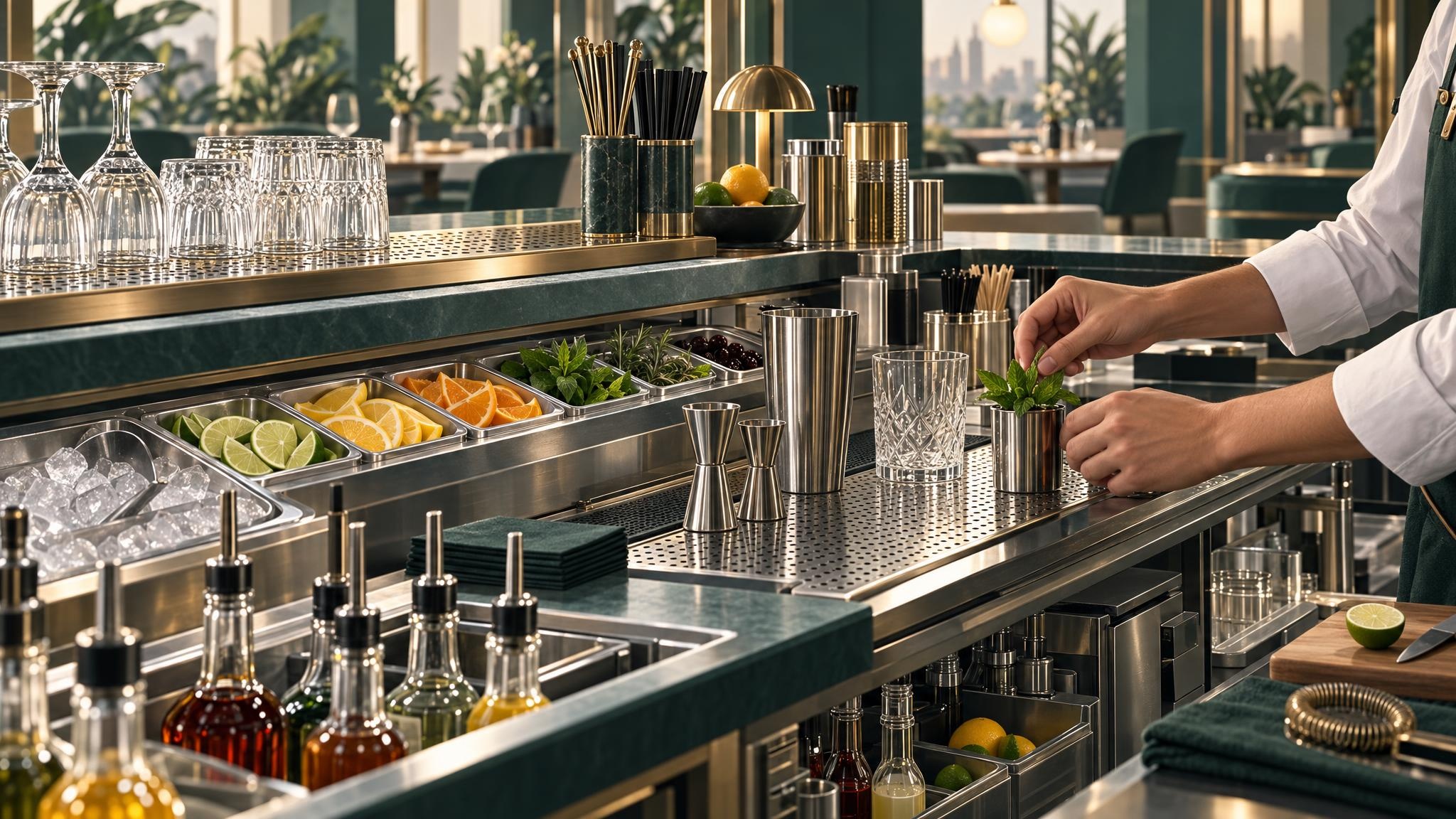
It also helps connect the pieces that are often handled separately. Beverage strategy affects pricing and purchasing. Menu structure affects service speed. Marketing affects how the guest perceives the offer. Reporting affects whether the changes are actually working. If those pieces are not connected, the business can end up with nice ideas and weak execution.
That is the difference between a narrow creative exercise and a commercial hospitality engagement. When you are building for restaurants, bars, hospitality groups, beverage suppliers, emerging brands, or hospitality technology providers, you need someone who can think like an operator and communicate like a strategist.
Durbin Consulting Group takes that approach by combining beverage strategy, marketing support, and commercial thinking with a clear view of how hospitality businesses actually run. If you want to see how that perspective carries across different types of work, you can review related insights and case studies before you reach out.
When you are ready to talk through your goals, the current pressure points, and what support would be most useful, schedule a beverage consulting conversation. That is usually the simplest way to figure out whether you need a menu reset, a broader hospitality consulting engagement, or a more focused plan for the next phase.
Example scenarios where consulting helps
Example 1: A restaurant group wants to simplify a beverage menu before a seasonal reset. The current list is too long, ingredients are duplicated across too many recipes, and new staff need too much coaching. A consultant would review sales mix, identify what is worth keeping, tighten the hierarchy, and rebuild the menu so it can be executed more cleanly with the labor on hand.
Example 2: A bar concept has strong traffic but uneven execution. Drinks taste different from shift to shift, ordering is inconsistent, and managers are spending too much time correcting the basics. A consultant would review bar setup, specs, inventory habits, and training, then build the structure the team needs to repeat the program more reliably.
Example 3: A hospitality brand is launching in a new market and needs a beverage strategy that supports the opening while giving the marketing team clear talking points. In that case, the consulting work should connect the menu, the service model, the launch plan, and the guest-facing language so the offer feels coherent inside the venue and outside it.
If you are comparing beverage consulting, hospitality consulting, and broader restaurant consulting services, the real question is simple: do you need a person to create ideas, or do you need a partner who can help your team make better commercial decisions and execute them well? In hospitality, that difference usually determines whether the program just looks better or actually works better.